

Hey there! As a supplier of kk linear modules, I often get asked about the installation space requirements for these nifty devices. So, I thought I'd take a few minutes to break it down for you in this blog post.
First off, let's talk a bit about what kk linear modules are. Kk Linear Modules are a type of linear motion system that can be used in a wide range of applications, from automation and robotics to manufacturing and packaging. They're known for their precision, reliability, and ease of use. You can learn more about them here.
Now, when it comes to the installation space requirement for kk linear modules, there are a few key factors to consider.
1. Module Size
The physical dimensions of the kk linear module itself are obviously a major factor. Kk linear modules come in a variety of sizes, and you need to make sure you have enough space to accommodate the length, width, and height of the module. For example, if you're using a larger module for a heavy - duty application, it's going to take up more space compared to a smaller, more compact module. You can think of it like buying furniture for your room; you need to measure the available space before you make a purchase.
2. Stroke Length
The stroke length is the distance that the moving part of the linear module can travel. This is another crucial aspect of the installation space. If you have a long - stroke kk linear module, you'll need to provide enough space for the full movement of the slider or carriage. Let's say you have a module with a stroke length of 500mm. You need to ensure that there's at least 500mm of clear space in the direction of the stroke for the module to operate properly. Otherwise, the module might hit an obstacle during its movement, which can cause damage and affect its performance.
3. Mounting Configuration
The way you mount the kk linear module also affects the space requirements. There are different mounting options available, such as horizontal, vertical, or inclined mounting. Each mounting configuration has its own space implications. For instance, if you mount the module vertically, you'll need to consider the height clearance above and below the module to allow for proper installation and maintenance. On the other hand, horizontal mounting might require more lateral space for the module and any associated components.
4. Associated Components
Kk linear modules often work in conjunction with other components like motors, controllers, and sensors. These additional components also need to be factored into the installation space. For example, if you're using a motor to drive the linear module, you'll need to have enough space to mount the motor and run the necessary wiring. Similarly, sensors that are used for position feedback or safety purposes need to be installed in the right locations, which might take up some extra space around the module.
5. Maintenance and Accessibility
Don't forget about the space needed for maintenance and accessibility. You should be able to easily access the module for cleaning, lubrication, and replacement of parts. This means leaving some extra space around the module so that you can reach all the necessary areas without any hassle. If you cram the module into a tight space, it's going to be a real pain to perform maintenance tasks, and it might even lead to neglecting proper upkeep, which can shorten the lifespan of the module.
Now, let's compare kk linear modules with other types of linear modules in terms of installation space.
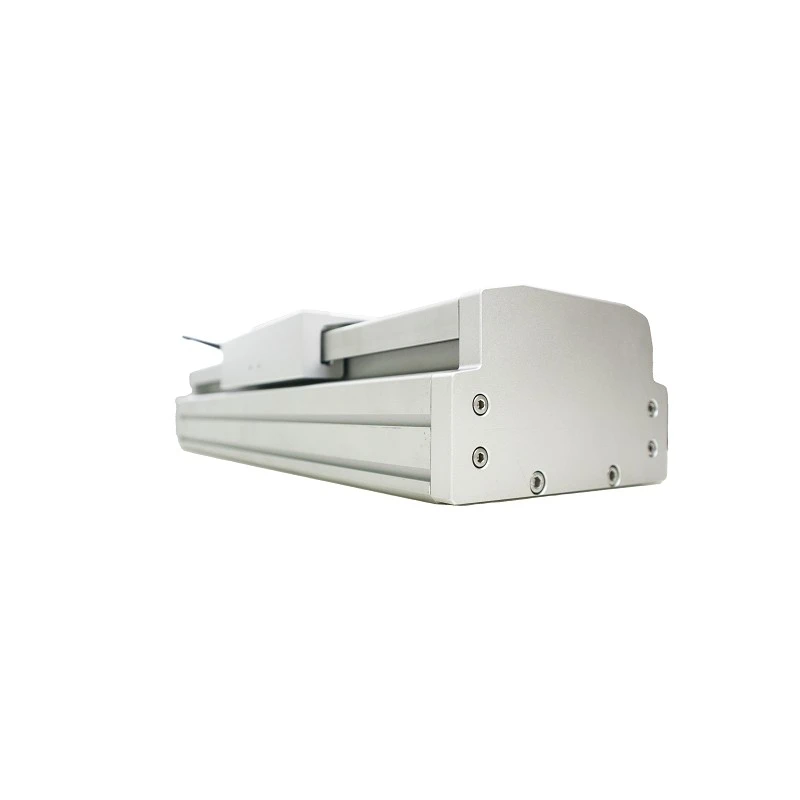

Comparison with Manual Linear Modules
Manual Linear Modules, as the name suggests, are operated manually. They are generally simpler in design and often smaller in size compared to kk linear modules. However, if you're looking for automation and precision, kk linear modules are a better choice. In terms of installation space, manual linear modules might require less space overall because they don't have the complex motor and control systems that kk linear modules do. You can find out more about manual linear modules here.
Comparison with Rack and Pinion Linear Modules
Rack and Pinion Linear Modules use a rack and pinion mechanism to convert rotational motion into linear motion. These modules can be quite powerful and are suitable for applications that require high - speed and high - load capacity. But they also tend to be larger and bulkier compared to kk linear modules. So, if space is a constraint, kk linear modules might be a more suitable option. Check out more details about rack and pinion linear modules here.
In conclusion, the installation space requirement for kk linear modules depends on multiple factors including module size, stroke length, mounting configuration, associated components, and maintenance needs. It's really important to carefully assess these factors before you install a kk linear module to ensure that you have the right amount of space and that the module can operate efficiently and safely.
If you're in the market for kk linear modules or have any questions about their installation space requirements, don't hesitate to reach out. We're here to help you find the perfect solution for your application. Whether you're a small - scale manufacturer or a large - scale industrial operation, we can provide you with high - quality kk linear modules that meet your specific needs. Contact us today to start the procurement discussion and take your project to the next level!
References
- Industry standards and guidelines for linear motion systems
- Product manuals and specifications of kk linear modules
- Technical literature on automation and robotics related to linear motion applications