

Selecting a long life linear guide rail for a specific application is a critical decision that can significantly impact the performance, efficiency, and longevity of your machinery. As a long life linear guide rail supplier, I understand the complexities involved in this process. In this blog, I will share some key considerations to help you make an informed choice.
Understanding the Application Requirements
The first step in selecting a long life linear guide rail is to have a clear understanding of the specific application requirements. Different applications have different demands in terms of load capacity, speed, accuracy, and environmental conditions.
Load Capacity
Load capacity is one of the most important factors to consider. You need to determine the maximum static and dynamic loads that the guide rail will need to support. Static load refers to the force exerted on the guide rail when the system is at rest, while dynamic load is the force applied during operation. The guide rail must be able to withstand these loads without experiencing excessive wear or deformation. For example, in heavy-duty industrial applications such as Linear Guides for Machine Tools, the load capacity requirements are usually much higher compared to light-duty applications.

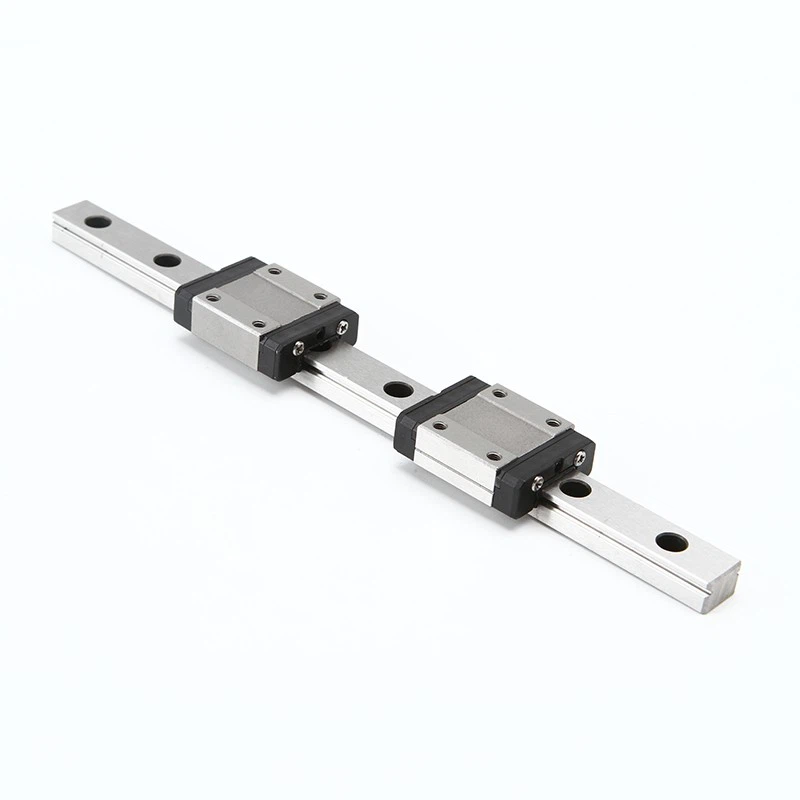
Speed
The operating speed of the system also plays a crucial role in guide rail selection. High - speed applications require guide rails that can handle rapid movements without generating excessive heat or vibration. High Speed Motion Linear Guide Rail is designed specifically for such applications. These guide rails often feature advanced materials and precision manufacturing techniques to ensure smooth and stable operation at high speeds.
Accuracy
Depending on the application, different levels of accuracy may be required. For applications such as precision machining or metrology, high - precision guide rails are necessary to ensure the desired level of accuracy and repeatability. The accuracy of a guide rail is typically specified in terms of straightness, parallelism, and positional accuracy.
Environmental Conditions
The environment in which the guide rail will operate can have a significant impact on its performance and lifespan. Harsh environments such as those with high humidity, dust, or corrosive chemicals require guide rails with appropriate protective features. For example, some guide rails are coated with anti - corrosion materials to resist the effects of moisture and chemicals.
Types of Long Life Linear Guide Rails
There are several types of long life linear guide rails available on the market, each with its own unique characteristics and advantages.
Ball Guide Rails
Ball guide rails are one of the most commonly used types of linear guide rails. They use balls as the rolling elements, which provide low friction and high - speed operation. Ball guide rails are suitable for a wide range of applications, including light to medium - duty industrial machinery. Their relatively simple design also makes them easy to install and maintain. Linear Motion Rolling Guide is a typical example of a ball guide rail.
Roller Guide Rails
Roller guide rails use rollers instead of balls as the rolling elements. They offer higher load - carrying capacity and better resistance to shock and vibration compared to ball guide rails. Roller guide rails are often used in heavy - duty applications where high loads and robustness are required.
Material and Manufacturing Quality
The material and manufacturing quality of the guide rail have a direct impact on its lifespan and performance.
Material Selection
High - quality materials are essential for long life linear guide rails. Common materials used for guide rails include steel, stainless steel, and aluminum. Steel guide rails are known for their high strength and durability, making them suitable for heavy - load applications. Stainless steel guide rails offer excellent corrosion resistance, which is ideal for applications in harsh environments. Aluminum guide rails are lightweight and have good thermal conductivity, making them suitable for applications where weight reduction is important.
Manufacturing Precision
Precision manufacturing processes ensure the accuracy and quality of the guide rail. Advanced machining techniques, such as grinding and honing, are used to achieve the required surface finish and dimensional accuracy. A well - manufactured guide rail will have smooth surfaces and precise geometries, which reduce friction and wear, and improve the overall performance of the system.
Lubrication and Maintenance
Proper lubrication and maintenance are essential for ensuring the long life of linear guide rails.
Lubrication
Lubrication helps to reduce friction and wear between the rolling elements and the guide rail surface. It also prevents corrosion and contamination. Different types of lubricants are available, including grease and oil. The choice of lubricant depends on the application requirements, such as speed, load, and environmental conditions. Regular lubrication intervals should be established to ensure optimal performance.
Maintenance
Regular maintenance is necessary to keep the guide rail in good condition. This includes cleaning the guide rail to remove dust and debris, inspecting for signs of wear or damage, and replacing worn components in a timely manner. Following a proper maintenance schedule can significantly extend the lifespan of the guide rail.
Compatibility with Other Components
The linear guide rail should be compatible with other components in the system, such as the carriage, linear motors, and sensors. Compatibility ensures smooth operation and optimal performance of the entire system. When selecting a guide rail, it is important to consider the mounting dimensions, interface requirements, and electrical connections of the other components.
Cost - Benefit Analysis
While it is important to select a high - quality long life linear guide rail, cost is also a significant factor. A cost - benefit analysis should be conducted to evaluate the long - term costs and benefits of different guide rail options. This includes considering the initial purchase price, installation costs, maintenance costs, and potential downtime. In some cases, a more expensive guide rail may offer better performance and longer lifespan, resulting in lower overall costs in the long run.
Conclusion
Selecting a long life linear guide rail for a specific application requires a comprehensive understanding of the application requirements, the different types of guide rails available, material and manufacturing quality, lubrication and maintenance, compatibility with other components, and cost - benefit analysis. As a long life linear guide rail supplier, I am committed to providing high - quality products and professional advice to help you make the best choice for your application.
If you are in the process of selecting a linear guide rail for your specific application, I encourage you to reach out to us for further consultation. We have a team of experts who can provide you with detailed information and support to ensure that you select the most suitable guide rail for your needs. Let's discuss your requirements and find the perfect solution together.
References
- Manufacturer's catalogs and technical manuals of linear guide rails
- Industry standards and regulations related to linear motion systems
- Research papers on the performance and durability of linear guide rails