

As a seasoned supplier of bearing screws, I've encountered numerous clients grappling with the challenge of determining the thread pitch of these crucial components. Understanding the thread pitch is essential as it directly impacts the functionality, compatibility, and performance of bearing screws in various applications. In this blog, I'll share some valuable insights and practical methods to help you accurately determine the thread pitch of bearing screws.
1. Understanding Thread Pitch
Before delving into the methods of determining thread pitch, it's important to have a clear understanding of what thread pitch is. Thread pitch refers to the distance between adjacent threads on a screw. It is typically measured in millimeters (mm) for metric screws and threads per inch (TPI) for imperial screws. A finer thread pitch means more threads per unit length, while a coarser thread pitch indicates fewer threads.
The thread pitch of a bearing screw plays a vital role in its performance. A proper thread pitch ensures a secure fit between the screw and the mating part, preventing loosening due to vibration or other external forces. It also affects the torque required for installation and removal, as well as the load - carrying capacity of the screw.
2. Visual Inspection
One of the simplest ways to get an initial idea of the thread pitch is through visual inspection. This method is most effective when you have a reference screw with a known thread pitch for comparison.
First, examine the screw closely. Look at the spacing between the threads. If you have a screw gauge or a pitch gauge, it can be very helpful. A pitch gauge is a tool with multiple teeth of different thread pitches. You can match the teeth of the gauge to the threads of the bearing screw. Place the gauge against the screw threads and find the tooth that fits perfectly between the threads. The marking on that tooth indicates the thread pitch of the screw.
However, visual inspection has its limitations. It may not be accurate for very fine or very coarse threads, and it can be difficult to distinguish between similar thread pitches. Also, if the screw is dirty or damaged, it can affect the accuracy of the inspection.
3. Measuring with a Caliper
A caliper is a precise measuring tool that can be used to measure the thread pitch of a bearing screw. To measure the thread pitch using a caliper, follow these steps:
- Select a suitable caliper. A digital caliper is preferred as it provides more accurate readings.
- Place the caliper jaws on the crest of two adjacent threads. Make sure the caliper is perpendicular to the axis of the screw.
- Take the measurement. The value you get is the thread pitch if the screw is a single - start thread. For multi - start threads, you need to divide the measured distance by the number of starts.
It's important to note that when measuring with a caliper, you should take multiple measurements at different points along the screw to ensure accuracy. Also, be careful not to damage the threads while taking the measurement.
4. Using a Micrometer
A micrometer is another highly accurate measuring instrument. It can provide more precise measurements than a caliper, especially for small thread pitches.
To measure the thread pitch with a micrometer:
- Select an appropriate micrometer. A screw thread micrometer is specifically designed for measuring thread parameters, but a regular outside micrometer can also be used.
- Place the anvil and spindle of the micrometer on the threads. Adjust the micrometer until it gently touches the threads.
- Read the measurement on the micrometer scale. Similar to using a caliper, multiple measurements should be taken at different positions on the screw.
5. Referring to Manufacturer's Documentation
If the bearing screws come with manufacturer's documentation, it is the most reliable source of information about the thread pitch. The documentation usually includes detailed specifications of the screw, such as the thread type (metric or imperial), the thread pitch, and other important parameters.
If you don't have the original documentation, you can try to contact the manufacturer directly. Provide them with as much information as possible about the screw, such as its size, appearance, and the application it is used for. They should be able to provide you with the correct thread pitch.
6. Compatibility with Mating Parts
In some cases, you can determine the thread pitch by considering the compatibility with the mating parts. For example, if the bearing screw is used to connect to a nut or a threaded hole in a machine component, the thread pitch of the screw must match that of the mating part.
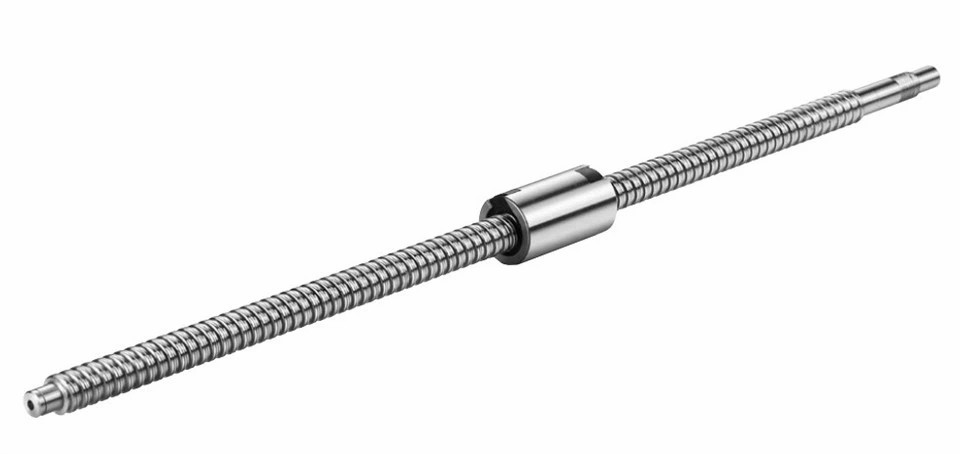

Inspect the mating part carefully. If it has a visible thread, you can use the methods mentioned above to measure its thread pitch. This will give you a good indication of the thread pitch of the bearing screw.
7. Importance of Correct Thread Pitch in Bearing Screw Applications
Using a bearing screw with the correct thread pitch is crucial in various applications. In the case of Straight Cylinder Type SCA Series Bearing, the right thread pitch ensures a proper connection between the bearing and other components. This helps to maintain the stability and smooth operation of the bearing, reducing the risk of premature wear and failure.
Similarly, for Strong Dust - proof SFNU Series Ball Bearing, a correct thread pitch is essential for effective installation and secure fastening. It also contributes to the overall performance and longevity of the bearing, especially in environments where dust and debris are present.
In applications involving SCA Series Ball Bearing Drawer Slide Rail, the thread pitch of the screws used to attach the slide rail determines the smoothness of the drawer movement. An incorrect thread pitch can lead to a loose or tight fit, causing the drawer to stick or rattle during operation.
Conclusion
Determining the thread pitch of bearing screws is a critical task that requires careful consideration and the use of appropriate methods. Whether you choose visual inspection, measurement with tools like calipers and micrometers, referring to manufacturer's documentation, or considering compatibility with mating parts, each method has its own advantages and limitations.
As a bearing screw supplier, I understand the importance of providing high - quality products with accurate specifications. If you are still unsure about the thread pitch of the bearing screws you need, or if you have any other questions regarding our products, I encourage you to contact us for further discussion and procurement negotiation. We are committed to providing you with the best solutions for your bearing screw needs.
References
- Machinery's Handbook, 31st Edition
- Thread Gaging Handbook by the American Society of Mechanical Engineers (ASME)
- Screw Thread Standards for Federal Services, Handbook 28 by the National Institute of Standards and Technology (NIST)